
Using dataflow diagrams to support research informed consent data management communications: participant perspectives

Using dataflow diagrams to support research informed consent data management communications: participant perspectives
Brian J McInnis, Ramona Pindus, Daniah H Kareem, Julie Cakici, Daniela G Vital, Eric Hekler, Camille Nebeker
Journal of the American Medical Informatics Association, 4 February 2025
Abstract
Objectives
Digital health research involves collecting vast amounts of personal health data, making data management practices complex and challenging to convey during informed consent.
Materials and Methods
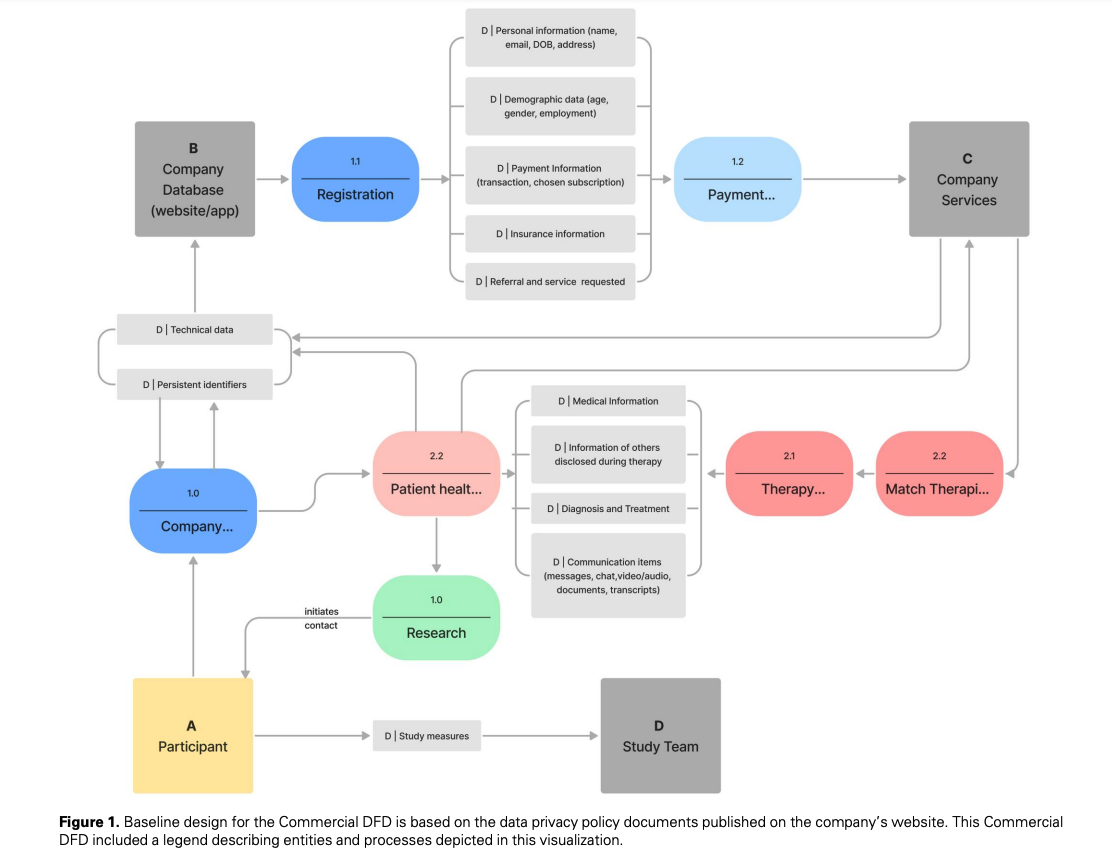
We conducted eight semi-structured focus groups to explore whether dataflow diagrams (DFD) can complement informed consent and improve participants’ understanding of data management and associated risks (N = 34 participants).
Results
Our analysis found that DFDs could supplement text-based information about data management and sharing practices, such as by helping raise new questions that prompt conversation between prospective participants and members of a research team. Participants in the study emphasized the need for clear, simple, and accessible diagrams that are participant centered. Third-party access to data and sharing of sensitive health data were identified as high-risk areas requiring thorough explanation. Participants generally agreed that the design process should be led by the research team, but it should incorporate many diverse perspectives to ensure the diagram was meaningful to potential participants who are likely unfamiliar with data management. Nearly all participants rejected the idea that artificial intelligence could identify risks during the design process, but most were comfortable with it being used as a tool to format and simplify the diagram. In short, DFDs may complement standard text-based informed consent documents, but they are not a replacement.
Discussion
Prospective research participants value diverse ways of learning about study risks and benefits. Our study highlights the value of incorporating information visualizations, such as DFDs, into the informed consent procedures to participate in research.
Conclusion
Future research should explore other ways of visualizing consent information in ways that help people to overcome digital and data literacy barriers to participating in research. However, creating a DFD requires significant time and effort from research teams. To alleviate these costs, research sponsors can support the creation of shared infrastructure, communities of practice, and incentivize researchers to develop better consent procedures.
Technological Adjuncts to Streamline Patient Recruitment, Informed Consent, and Data Management Processes in Clinical Research: Observational Study

Technological Adjuncts to Streamline Patient Recruitment, Informed Consent, and Data Management Processes in Clinical Research: Observational Study
Jodie Koh, Stacey Caron, Amber N Watters, Mahesh Vaidyanathan, David Melnick, Alyssa Santi, Kenneth Hudson, Catherine Arguelles, Priyanka Mathur, Mozziyar Etemadi
JMIR Formative Research, 29 January 2025
Abstract
Background
Patient recruitment and data management are laborious, resource-intensive aspects of clinical research that often dictate whether the successful completion of studies is possible. Technological advances present opportunities for streamlining these processes, thus improving completion rates for clinical research studies.
Objective
This paper aims to demonstrate how technological adjuncts can enhance clinical research processes via automation and digital integration.
Methods
Using one clinical research study as an example, we highlighted the use of technological adjuncts to automate and streamline research processes across various digital platforms, including a centralized database of electronic medical records (enterprise data warehouse [EDW]); a clinical research data management tool (REDCap [Research Electronic Data Capture]); and a locally managed, Health Insurance Portability and Accountability Act–compliant server. Eligible participants were identified through automated queries in the EDW, after which they received personalized email invitations with digital consent forms. After digital consent, patient data were transferred to a single Health Insurance Portability and Accountability Act–compliant server where each participant was assigned a unique QR code to facilitate data collection and integration. After the research study visit, data obtained were associated with existing electronic medical record data for each participant via a QR code system that collated participant consent, imaging data, and associated clinical data according to a unique examination ID.
Results
Over a 19-month period, automated EDW queries identified 20,988 eligible patients, and 10,582 patients received personalized email invitations. In total, 1000 (9.45%) patients signed consents to participate in the study. Of the consented patients, 549 unique patients completed 779 study visits; some patients consented to the study at more than 1 time period during their pregnancy.
Conclusions
Technological adjuncts in clinical research decrease human labor while increasing participant reach and minimizing disruptions to clinic operations. Automating portions of the clinical research process benefits clinical research efforts by expanding and optimizing participant reach while reducing the limitations of labor and time in completing research studies.

Consenting for themselves: A qualitative study exploring a Gillick Competence assessment to enable adolescents to self-consent to low-risk online research

Consenting for themselves: A qualitative study exploring a Gillick Competence assessment to enable adolescents to self-consent to low-risk online research
Maria Loades, Lara Willis, Emma Wilson, Grace Perry, Melanie Luximon, Christy Chiu, Nina Higson-Sweeney
BMJ Open, 13 February 2025
Abstract
Background
Providing digital mental health interventions online could expand access to help for young people, but requiring parental consent may be a barrier to participation. We therefore need a method that enables young people <16 years old (i.e. presumed competent in the UK) to demonstrate Gillick Competence (understanding of purpose, process, potential benefits, and potential harms) to self-consent to online, anonymous, low-risk studies.
Aim
To explore whether a new method for assessing Gillick Competence to participate in low risk, anonymous online studies is acceptable to both young people and parents.
Method
We interviewed 15 13–15-year-olds and 12 parents of this age group in the UK. Using a qualitative approach, we explored the acceptability of a series of multiple-choice questions (MCQs) designed to assess understanding of a specific online self-help research study testing a self-kindness intervention.
Results
The MCQ answers that participants gave mostly corresponded with their narrative explanations of their understanding during interviews. Young people and parents thought that the process was empowering and could increase access to research whilst also promoting independence. However, they emphasised the importance of individual differences and different research contexts and highlighted the need for safeguards to be in place.
Conclusions
The MCQs were acceptable to both young people and parents, providing preliminary evidence for the potential of this process for allowing <16’s to self-consent to online, anonymous, low-risk mental health research. Further research is needed to validate the effectiveness of this process among a diverse range of populations and research contexts.

Between Protection and Participation: Informed Consent, Ethics and Play in Research With Children and Youth

Between Protection and Participation: Informed Consent, Ethics and Play in Research With Children and Youth
Original Article
Maria V. Barbero
Children & Society, 11 February 2025
Abstract
While a robust scholarly dialogue has emerged in recent decades surrounding child and youth-centred research methods, less attention has been paid to how other elements of research design can better account for the needs, vulnerabilities, and perspectives of children and youth. In this article, I discuss challenges tied to informed consent processes and inflexible ethical guidelines in social science research with minors. Drawing from the child and youth studies literature as well as my past research experiences, I explore what it means to develop ethical approaches that are situated, responsive, and relational and which focus not only on the protection of minors but also their inclusion and full participation in research. In doing so, I develop the concept of “playful consent checkpoints” and argue that playful approaches can offer interesting and flexible possibilities for responding to ongoing ethical challenges in research with young people.

Ascribed Agency, Denied Influence: How Adult Narratives Shape and Constrain the Right of Children in the Justice System to be Heard

Ascribed Agency, Denied Influence: How Adult Narratives Shape and Constrain the Right of Children in the Justice System to be Heard
Mark Yin
The International Journal of Children’s Rights, 17 December 2024
Abstract
Following McMellon and Tisdall’s (2020) literature review on children’s participation rights, as embodied in the Convention on the Rights of the Child, Article 12, this narrative review considers how access to these rights is affected by children’s involvement in the criminal justice system. Based on 30 papers relating to youth participation in youth justice, it is argued that adult-driven narratives of criminalised children as “risky”, “self-interested” or “vulnerable” variously undermine their right to be heard, while children’s narratives about themselves are often neglected. This suggests that the “perennial” implementation solutions identified by McMellon and Tisdall belie more fundamental questions about the very idea of childhood – as exemplified by children in conflict with the law – which warrant their own analysis.

Giving Due Weight to Children and Young People in Australian Policy Making

Giving Due Weight to Children and Young People in Australian Policy Making
Meaghan Vosz, Anne Graham, Mark Hughes
The International Journal of Children’s Rights, 17 December 2024
Abstract
While Article 12 of the Convention on the Rights of the Child is often cited to assure children’s right to express their views freely in all matters affecting them, little is known about the practices associated with giving due weight to their views in policy-making that impacts their lives. This paper reports on critical-participatory research exploring the practices of more than 100 policy actors, conducted with five young co-researchers with lived experience of Australian child protection and out-of-home care systems. Practices associated with giving due weight included: involving children as policy actors, listening, giving feedback and reporting back, and amplifying their views. Practices were constrained by discourses of authenticity/tokenism; bureaucracy and jurisdiction; the attribution of expertise; and limited funding and time. Research demonstrated opportunities for realising Article 12 through intergenerational dialogue and valuing the lived experience and agency of young people as policy actors.

A New Approach for Investigating Children’s Participation Rights in Early Childhood Education: Listening to Voices in Interaction for Participation (LViIP)

A New Approach for Investigating Children’s Participation Rights in Early Childhood Education: Listening to Voices in Interaction for Participation (LViIP)
Cynthia Hicban, Maryanne Theobald, Julia Mascadri
The International Journal of Children’s Rights, 17 December 2024
Abstract
   Research into children’s participation rights has largely focused on the challenges for early childhood educators to navigate children’s participation rights enactment. The aim of this article is to show how the enactments of children’s participation rights in an educational setting can be identified using a new approach, Listening to Voices in Interaction for Participation (LViIP).

LViIP is based on Lundy’s (2007) conceptualisation of Article 12(1) and combines with conversation analysis (ca) to identify how rights enactment sequentially unfolds and how the interactants mobilise (or gatekeep) opportunities for children to have a say.

A step-by-step worked example of LViIP shows in detail how participatory approaches by educators and children are built in early childhood education, thus demonstrating which interactional practices contribute towards the co-construction of children’s participation rights and how early childhood professionals can listen, be and do as duty-bearers of children’s rights in their daily practice.

Guidelines for the Creation of Accessible Consent Materials and Procedures: Lessons from Research with Autistic People and People with Intellectual Disability

Guidelines for the Creation of Accessible Consent Materials and Procedures: Lessons from Research with Autistic People and People with Intellectual Disability
Research Article
Kelly B. Beck, Kristen T. MacKenziem, Anne V. Kirby, Katherine McDonald, Ian Moura, Kaitlyn Breitenfeldt, Elizabeth Rutenberg, Tanvi Kumar, Juliet Mancino, Maya Sabatello, Shannon Roth, Christina Nicolaidis
Autism in Adulthood, 19 February 2025
Abstract
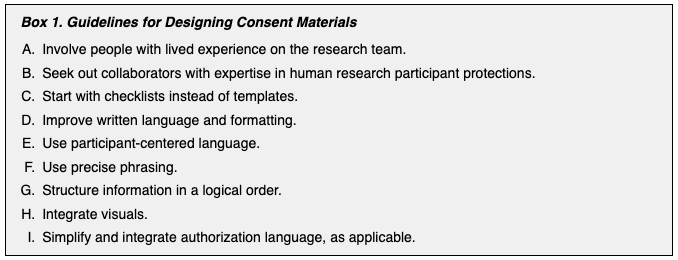
Informed, voluntary, ongoing consent is a central tenet of ethical research. However, consent processes are prone to exclusionary practices and inaccessibility. Consent materials are often too long and complex to foster understanding and ensure that people make truly informed decisions to participate in research. While this complexity is problematic for all people, these challenges are compounded for autistic people and people with intellectual disability. Consent materials and procedures rarely incorporate accommodations for processing and communication differences common in autism and intellectual disability. Failure to provide such accommodations ultimately threatens the conduct of ethical research. We describe lessons learned across multiple major U.S. research institutions that improved informed consent materials and procedures, with the goal of fostering responsible inclusion in research for autistic people and people with intellectual disability. We used these alternative materials and procedures in multiple research projects with samples of autistic people and people with intellectual disability. Each contributing team partnered with university human research participant protections personnel, accessibility experts, community members, and researchers to develop rigorous procedures for improving the readability and accessibility of informed consent materials. We present guidelines for designing consent materials and procedures and assert that participatory methods are vital to the success of ongoing accessibility initiatives. Adoption of understandable consent materials and accessible consent procedures can cultivate more equitable, respectful, and inclusive human research practices. Future work should expand on this work to design inclusive practices for populations with additional considerations.

Consent Mechanisms and Default Effects in Health Information Exchange in Japan

Consent Mechanisms and Default Effects in Health Information Exchange in Japan
Original Research
Atsushi Ito, Fumihiko Nakamura
Frontiers in Digital Health, 3 February 2025
Background
Health information exchange (HIE) is an information system that efficiently shares patient information across medical institutions. However, traditional consent methods, represented by opt-in and opt-out, face a trade-off between efficiency and ethical, making it difficult to fundamentally improve consent rates. To address this issue, we focused on default settings and proposed an innovative approach called the “two-step consent model,” which leverages the advantages of existing models using utility theory. We evaluated the acceptability of this method.
Methods
An online survey was conducted with 2,000 participants registered with Japan’s largest internet survey company. We compared and analyzed the consent rates of the opt-in, opt-out, and two-step consent models. Results: The opt-in model had a 29.5% consent rate, maximizing patient autonomy but increasing the burden and reducing efficiency. The opt-out model had a 95.0% consent rate but raised concerns among half of the respondents. The two-step consent model had a 68.5% consent rate, demonstrating its cost-effectiveness compared with traditional models
Discussion
The two-step consent model, involving implicit and explicit consent when needed, ensures efficient consent acquisition while respecting patient autonomy. It is a cost-effective policy option that can overcome the ethical issues associated with the opt-out model. Introducing methods that leverage both opt-in and opt-out advantages is expected to address HIE stagnation.
Conclusion
The two-step consent model is expected to improve consent rates by balancing the efficiency and quality of consent acquisition. To achieve this, patient education is crucial for raising awareness and understanding of HIE and its consent methods.

Surgical informed consent practice and associated factors among adult postoperative patients in public hospitals of Mekelle, Tigray, Ethiopia 2023/2024

Surgical informed consent practice and associated factors among adult postoperative patients in public hospitals of Mekelle, Tigray, Ethiopia 2023/2024
Research Article
Fiseha Abadi Gebreanenia, Hailemarim Berhe Kahsay, Desta Siyoum Belay, Binyam Gebrehiwet Tesfay, Fissha Brhane Mesele, Mamush Gidey Abirha
PLOS One, 3 February 2025
Open Access
Abstract
Background
Substantial weaknesses and omissions of surgical informed consent are evident and the current elements of the surgical informed consent process are largely neglected in daily practice. This study aimed to assess surgical informed consent practice and associated factors among adult postoperative patients in public hospitals of Mekelle, Tigray, Ethiopia.
Methods
Institution based cross-sectional study was conducted among 314 adult postoperative patients in public hospitals of Mekelle, Tigray, Ethiopia. Participants were selected using systematic random sampling. A pretested interviewer-administered questionnaire was used to collect data. Descriptive, Descriptive, bivariate and multivariable logistic regression analyses were performed using statistical package for social science version 27.
Result
Only 35.8% (CI 95%, 30.6, 41) of the respondents were identified to have received the recommended (6 or more) components of surgical informed consent. Educational level [AOR 5.76 (1.02, 32.6)], timing of surgical informed consent delivery [AOR 3.27 (1.5, 7.11)], qualification of counselor who took surgical informed consent them [AOR3.185 (1.21, 8.38)], hospital type [AOR 2.85 (1.26, 6.46)], and duration of counseling [AOR 6.9 (3.33, 14.3)] were statistically significant at P<0.05.
Conclusion
Majority of participants did not receive comprehensive information during the surgical informed consent process in the study hospitals. To improve the delivery it is suggested that health professionals; create rapport with patient, spend more time during counseling.