
Evaluation of a DIC Broad Consent Cohort

Evaluation of a DIC Broad Consent Cohort

Observational Study

Marvin O Kampf, Hans-Ulrich Prokosch, Christian Gulden, Detlef Kraska, Thomas Ganslandt, Susanne A Seuchter

Studies in Health Technology and Informatics, 15 May 2025

Abstract

This single-center retrospective observational study accesses potential differences between adult patients who were admitted to the University Hospital Erlangen between March 2021 and December 2023 (hospital cohort) and adult patients who have given consent to use their documented data for research purposes (broad consent cohort). Demographic and clinical data (ICD-10 diagnoses) were extracted from the university hospitalt’s FHIR research data repository and analyzed in pseudonymized form. The two cohorts comprise 98,564 and 1,678 patients respectively and were compared concerning representativity of the BC cohort. The results suggest that the ongoing stepwise rollout of the consent obtainment process creates biases in clinical and demographic characteristics. For as long as these biases persist, we suggest researchers to prefer federated over centralized approaches to data analysis, where broad consent is not required and the analyses can be based on the total hospital cohort.
Ownership and Gatekeeping vs. Safeguarding and Consent: How Migrant Parents Navigate Child Data Management Complexities

Ownership and Gatekeeping vs. Safeguarding and Consent: How Migrant Parents Navigate Child Data Management Complexities

Conference Proceedings

Rui Huan, Kopo M. Ramokapane, Awais Rashid

2025 IEEE Symposium on Security and Privacy, May 2025 [USA]; pp 2209-2227

Abstract

Parents pursuing opportunities abroad increasingly find themselves raising children in new cultural and legal environments. This responsibility extends to complying with unfamiliar regulations and safeguarding their children’s data which is often complex and a challenging task. In this study, we examine how migrant parents perceive, manage, and safeguard data related to their children. Through interviews with 17 migrant parents and guardians in the UK, we uncover nuanced and evolving perspectives on data ownership and management. Migrant parents express significant concerns about losing control over data shared locally and with extended families abroad, with fears of misuse that could harm their children or jeopardize their immigration status. We discuss their data management strategies and approaches to navigating changing concepts of data ownership and consent. Our findings underscore the need for culturally sensitive support to help migrant families safeguard their children’s data and highlight directions for future research into the complexities of cross-border data sharing and its implications.

Challenges and Solutions in Implementing Informed Consent in Digital Environments: A Scoping Review

Challenges and Solutions in Implementing Informed Consent in Digital Environments: A Scoping Review
Ramona Schmidt, Ina Schiering, Harald Zwingelberg, Michael Friedewald
IEEE Access, 30 April 2025
Abstract
In times of ubiquitous data collection and processing, the need for privacy and control is stronger than ever. The implementation of informed consent is becoming increasingly important. The obligation to obtain informed consent and the user’s right to information and to refuse or withdraw consent is already defined in the GDPR. Particularly within the mHealth [mental health] sector, where the collection of particularly sensitive health data occurs, the realisation of informed consent presents an important challenge. However, many applications are still not compliant, and companies seem to struggle with the implementation of effective informed consent. This scoping review analyses how the technical implementation of informed consent has been addressed in the literature to date, what challenges need to be overcome when implementing informed consent, and what solutions are proposed and discussed in the current literature on the implementation of informed consent.

Toward Ethical Digital Practices: Guidelines for Consent, Accountability, and Transparency in Anthropology

Toward Ethical Digital Practices: Guidelines for Consent, Accountability, and Transparency in Anthropology
Amber M Plemons, Micayla C Spiros
American Journal of Biological Anthropology, April 2025
Abstract
Objectives
Digital tools and imaging are now common practice in biological anthropology research. Ethical concerns around the management, use, and display of digital human remains are a budding topic of discussion. Currently, there are no formalized discipline-wide guidelines or standards for digital ethics in biological anthropology. To bridge the gap between ethical standards and digital practices, we need to gauge current digital tools and resources used by professionals, as well as the state of ethical codes for professional organizations regarding digital media in biological anthropology.
Materials and methods
This study reviews ethical statements from five professional organizations and survey responses from biological anthropologists on their use and opinions of digital remains. Text analyses were performed on ethics statements to identify terms related to digital remains and on survey responses to identify key themes in opinions of digital ethics.
Results
Results demonstrated that only one organization mentions digital ethics while survey results indicate researchers are creating and using digital tools in their research. Thematic text analyses underline the need for consent, digital ethical guidelines, anonymity, data security, and cultural sensitivity and respect.
Discussion
These results highlight the gap in practice and guidelines for digital ethics. We propose immediate action items, including the development of a cross-cultural, disciplinary working group to generate cohesive digital ethics standards, explicit statements on digital human remains in donor forms, the addition of digital best practice standards into organizations’ ethics codes, and ethics statements added to current digital platforms. These proposed ethical guidelines and questions for donor forms are provided for these action items.

Editor’s Note: “Digital remains” refers to the digital data and information a person leaves behind after death, including online accounts, emails, social media posts, documents, and other digital assets.

Ethics of Digitalization and Artificial Intelligence in Mental Healthcare

Ethics of Digitalization and Artificial Intelligence in Mental Healthcare
Book Chapter
Emanuel Schwarz, Andreas Meyer-Lindenberg
Ethics in Psychiatry, 20 March 2025 [Springer]
Abstract
Digitalization in healthcare encompasses a broad spectrum of rapidly advancing technological developments, aimed at improving the effectiveness and quality of medical care. This shift in medical care provisioning gives rise to several ethical challenges that need to be successfully addressed to ensure the responsible clinical implementation of digital technologies, and of the associated research. This chapter provides an overview of these challenges across different technological fields relevant for healthcare digitalization, with particular focus on the aspects of pronounced relevance for mental health applications. It explores ethical considerations relevant to electronic health record systems and other data platforms, which are a cornerstone for the future development of healthcare solutions, such as through machine learning technology. We discuss important questions regarding informed consent and data reuse, as well as aspects relevant for digital mental health interventions. The chapter then focuses on mobile technology and data analytics, with particular emphasis on precision medicine approaches. Finally, digital twins are discussed as an upcoming technological development that brings about several unique ethical challenges. Addressing the ethical challenges of digital healthcare applications will be the basis for their responsible development and use, and will aid in building trust by different stakeholders that is fundamental for clinical care and future research.

Managing legal risks in health information exchanges: A comprehensive approach to privacy, consent, and liability

Managing legal risks in health information exchanges: A comprehensive approach to privacy, consent, and liability
Tariq K Alhasan
Journal of Healthcare Risk Management, 4 March 2025
Abstract
Health Information Exchanges (HIEs) are revolutionizing healthcare by facilitating secure and timely patient data sharing across diverse organizations. However, their rapid expansion has introduced significant legal and ethical challenges, particularly regarding privacy, informed consent, and liability risks. This paper critically assesses the effectiveness of existing legal frameworks, including Health Insurance Portability and Accountability Act (HIPAA) and General Data Protection Regulation (GDPR), in addressing these challenges, revealing gaps in their application within HIEs. It argues that current consent models fail to provide meaningful control for patients, while privacy protections are weakened by issues such as re-identification and jurisdictional inconsistencies. Moreover, liability in data breaches remains complex due to ambiguous responsibility among stakeholders. The study concludes that reforms are needed, including dynamic consent models, standardized liability frameworks, and enhanced data governance structures, to ensure secure, ethical, and effective data sharing. These changes are essential to fostering patient trust, improving healthcare delivery, and aligning with Sustainable Development Goal (SDG) 3-ensuring healthy lives and promoting well-being for all.

Editor’s note: we recognise that the proposals in this article are at odds with a number of regulatory structures including GDPR and HIPAA.

Enhancing patient autonomy in data ownership: privacy models and consent frameworks for healthcare

Enhancing patient autonomy in data ownership: privacy models and consent frameworks for healthcare
Review Article
Minal R. Narkhede, Nilesh I. Wankhede, Akanksha M. Kamble
Journal of Digital Health, 3 March 2025
Abstract
Patient autonomy in healthcare has become increasingly significant in the digital age as individuals seek greater control over their health data. This review examines the ethical, legal and technological aspects of patient data ownership, emphasizing the need for privacy models and consent frameworks to empower patients, safeguard privacy and enhance transparency. Traditional doctor-patient confidentiality faces challenges due to advancements such as electronic health records, artificial intelligence and wearable technologies, necessitating updated frameworks to protect patient rights. Privacy models such as private, public and hybrid models present varying implications for data control, security and societal benefits. Emerging technologies such as blockchain and AI are revolutionizing data privacy by decentralizing data storage and enabling patient control while ensuring secure and ethical data utilization. Advanced consent frameworks, including dynamic and granular consent, provide patients with flexibility and transparency and promote trust and active participation in data-sharing decisions. Real-world implementations, such as Australia’s My Health Record and Estonia’s e-Health system, demonstrate the potential of patient-centric privacy frameworks to enhance healthcare quality and innovation. However, significant challenges persist, including regulatory ambiguities, cybersecurity risks and gaps in digital literacy. Addressing these issues requires collaboration among stakeholders to develop adaptable, secure and interoperable systems that prioritize patient autonomy. By integrating patient education, fostering interoperability and leveraging adaptive technologies, healthcare systems can balance privacy and innovation, build trust and ensure ethical data practices that empower individuals while advancing public health objectives.

Striking the Balance: Genomic Data, Consent and Altruism in the European Health Data Space

Striking the Balance: Genomic Data, Consent and Altruism in the European Health Data Space
Book Chapter
Eila El Asry, Juli Mansnérus, Sandra Liede
The European Health Data Space, 2025 [Taylor & Francis]
Abstract
The Data Governance Act (DGA) defines data altruism as sharing of data for purposes of general interest without seeking or receiving reward. The consent of the data subject is required if personal data is shared within the context of data altruism. Simultaneously, the European Health Data Space (EHDS) sets as one of its objectives to ensure a consistent and efficient framework for the secondary use of health data for the purposes of, inter alia, research, innovation and regulatory activities, thus at least partly sharing common goals with the concept of data altruism. The sharing of health data under the EHDS for secondary use is however not in principle based on the individual’s consent, though the final text includes an opt-out mechanism. This chapter discusses the compatibility of and relation between the data subject consent requirements in the DGA, GDPR and EHDS. While there is huge potential in the advanced use of genomic data for innovative biomedical research, advanced analytics and access to digitised and personalised healthcare, genetic data is inherently sensitive. Balancing the data subjects’ self-determination rights with the critical need for access to valuable data that can potentially save lives presents a significant challenge in this context.

Exploring Consent to Use Real-World Data in Lung Cancer Radiotherapy: Decision of a Citizens’ Jury for an ‘Informed Opt-Out’ Approach

Exploring Consent to Use Real-World Data in Lung Cancer Radiotherapy: Decision of a Citizens’ Jury for an ‘Informed Opt-Out’ Approach
Arbaz Kapadi, Hannah Turner-Uaandja, Rebecca Holley, Kate Wicks, Leila Hamrang, Brian Turner, Tjeerd van Staa, Catherine Bowden, Annie Keane, Gareth Price, Corinne Faivre-Finn, David French, Caroline Sanders, Søren Holm, Sarah Devaney
Health Care Analysis, 10 February 2025
Abstract
An emerging approach to complement randomised controlled trial (RCT) data in the development of radiotherapy treatments is to use routinely collected ‘real-world’ data (RWD). RWD is the data collected as standard-of-care about all patients during their usual cancer care pathway. Given the nature of this data, important questions remain about the permissibility and acceptability of using RWD in routine practice. We involved and engaged with patients, carers and the public in a two-day citizens’ jury to understand their views and obtain decisions regarding two key issues: (1) preferred approaches to consent for the use of RWD within the context of patients receiving radiotherapy for lung cancer in RAPID-RT and (2) how RWD use should be best communicated to patients. Individual views were polled using questionnaires at various stages of the jury, whilst group discussion activities prompted further dialogue about the rationale behind choices of consent. Key decisions obtained from the jury include: (1) an opt-out approach to consent for the use of RWD; (2) the opt-out approach to consent should be informed. Furthermore, it was advised that information and communication regarding the consent process and use of RWD should be accessible, clear and available in a variety of formats. It is important that the consent process for patient data use is underpinned by principles of autonomy and transparency with clear channels of communication between those asking for and giving consent. Moreover, the process of seeking consent from patients should be proportionate to the risks presented from their participation.

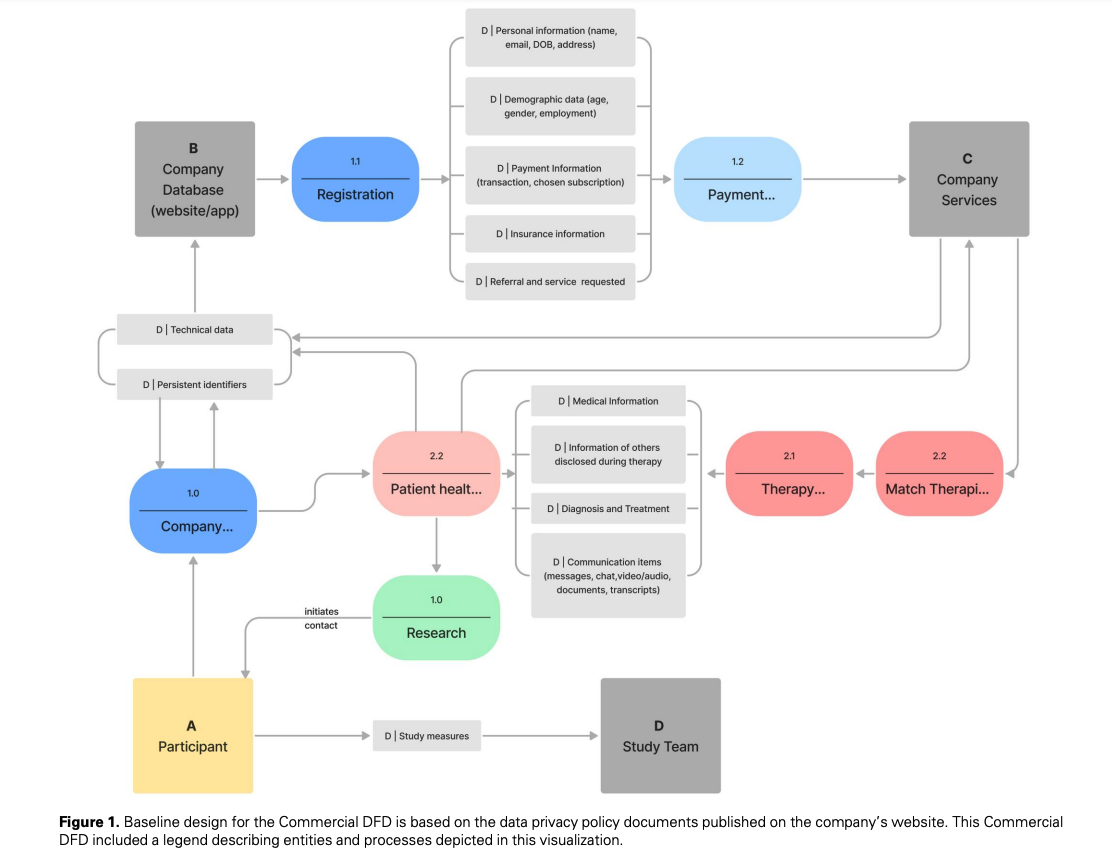
Using dataflow diagrams to support research informed consent data management communications: participant perspectives

Using dataflow diagrams to support research informed consent data management communications: participant perspectives
Brian J McInnis, Ramona Pindus, Daniah H Kareem, Julie Cakici, Daniela G Vital, Eric Hekler, Camille Nebeker
Journal of the American Medical Informatics Association, 4 February 2025
Abstract
Objectives
Digital health research involves collecting vast amounts of personal health data, making data management practices complex and challenging to convey during informed consent.
Materials and Methods
We conducted eight semi-structured focus groups to explore whether dataflow diagrams (DFD) can complement informed consent and improve participants’ understanding of data management and associated risks (N = 34 participants).
Results
Our analysis found that DFDs could supplement text-based information about data management and sharing practices, such as by helping raise new questions that prompt conversation between prospective participants and members of a research team. Participants in the study emphasized the need for clear, simple, and accessible diagrams that are participant centered. Third-party access to data and sharing of sensitive health data were identified as high-risk areas requiring thorough explanation. Participants generally agreed that the design process should be led by the research team, but it should incorporate many diverse perspectives to ensure the diagram was meaningful to potential participants who are likely unfamiliar with data management. Nearly all participants rejected the idea that artificial intelligence could identify risks during the design process, but most were comfortable with it being used as a tool to format and simplify the diagram. In short, DFDs may complement standard text-based informed consent documents, but they are not a replacement.
Discussion
Prospective research participants value diverse ways of learning about study risks and benefits. Our study highlights the value of incorporating information visualizations, such as DFDs, into the informed consent procedures to participate in research.
Conclusion
Future research should explore other ways of visualizing consent information in ways that help people to overcome digital and data literacy barriers to participating in research. However, creating a DFD requires significant time and effort from research teams. To alleviate these costs, research sponsors can support the creation of shared infrastructure, communities of practice, and incentivize researchers to develop better consent procedures.