
Beyond Individual Consent: The Hidden Crisis of Group Harm in the AI and Genomics Era
Open Peer Commentaries
Tony Yang
The American Journal of Bioethics, 29 January 2025
Excerpt
…Chapman and colleagues’ analysis highlights critical gaps in current regulatory frameworks, particularly around institutional review board (IRB) assessment of group risks, informed consent requirements, and criteria for consent waivers. Their work connects to and builds upon several themes identified in earlier work: the increasing salience of group risks in data-centric research, as highlighted by analyses of algorithmic harm and bias in big health data research (Obermeyer et al. Citation2019); the challenges of prospectively identifying group harms, emphasized in studies of genetic research with Indigenous communities (Garrison et al. Citation2019); and the limitations of individual-focused protections in addressing collective risks, a theme present across multiple analyses…
The Impact of Video Consent on Patient Satisfaction When Undergoing Percutaneous Nephrolithotomy: A Randomized Control Trial
The Impact of Video Consent on Patient Satisfaction When Undergoing Percutaneous Nephrolithotomy: A Randomized Control Trial
Kartik Sharma, Gautam Ram Choudhary, Shiv Charan Navriya, Jeena Raju Kudunthail, Deepak Prakash Bhirud, Mahendra Singh, Arjun Singh Sandhu
Société Internationale d’Urologie Journal, 12 February 2025
Abstract
Introduction
Consent-taking for surgery evolved from a historical paternalistic approach to informed consent in the mid-20th century. Modern healthcare models prioritize patient-centric care, and the use of multimedia tools may overcome challenges such as language barriers and complex medical surgical steps. This study evaluates the impact of an educational video on patient satisfaction for those undergoing percutaneous nephrolithotomy (PCNL), a procedure where explaining complexities verbally can be challenging.
Materials and Methods
A randomized control trial was conducted at a tertiary care center in India from July 2022 to April 2024. A total of 232 adult patients scheduled for PCNL were randomly assigned to a study group (Group A) or a control group (Group B). Group A viewed an educational video about PCNL, while Group B provided standard written consent. The video, presented in patients’ native languages, covered procedural details, potential outcomes, and post-operative care. Patient satisfaction was assessed using a 10-question questionnaire at discharge, with scores ranging from one (poor) to five (best). Statistical analysis was performed using SPSS software to compare outcomes between the two groups.
Results
The study found that Group A exhibited significantly higher satisfaction compared to Group B across all domains. Group A demonstrated a better understanding of the procedure, improved knowledge of post-operative care, reduced anxiety, and a greater awareness of potential complications. Specifically, the mean satisfaction scores for Group A were higher in understanding the procedure (13.15 vs. 10.00), post-operative care (8.46 vs. 6.84), and overall anxiety (8.65 vs. 6.96). The video also improved patients’ comprehension regarding potential complications and the need for further procedures. Complication rates and hospital stay durations were similar between both groups.
Discussion
The educational video significantly enhanced patient satisfaction and the understanding of PCNL. This multimedia approach provided a consistent, clear explanation of the procedure, which improved patient comprehension and reduced anxiety, irrespective of literacy levels. These findings support the integration of video-assisted consent in pre-operative education to enhance patient engagement and satisfaction.
Conclusions
The use of an educational video for consent in PCNL improves patient understanding and satisfaction. This method effectively complements traditional consent processes, providing a valuable tool for patient education in complex procedures.
Improving Endoscopy Room Efficiency: Evaluation of a Video as a Supplementary Tool for Informed Consent
Improving Endoscopy Room Efficiency: Evaluation of a Video as a Supplementary Tool for Informed Consent
A Kyei, O esenwa, C Tan, D Llovet, M Bernstein, B Mannino, L Cohen, N Griller, F Saibil, P Tartaro, E Yong, J Tinmouth
Journal of the Canadian Association of Gastroenterology, 10 February 2025
Abstract
Background
Endoscopy unit efficiency is critical because of the need to provide timely and quality care, despite limited resources. In previous work, obtaining informed consent negatively impacted efficiency. We developed a 3-minute animated video to facilitate the consent process, including describing colonoscopy, its purpose and potential risks/benefits.
Aims
1) Assess the ability of the video to support the informed consent process; 2) Determine the effectiveness of the video as a communication tool.
Methods
Using a critical case sample design with maximum variation, 12 participants completed pre- and post-colonoscopy 1:1 semi-structured interviews after viewing the video. Questions evaluated whether key components of informed consent were conveyed and assessed the video using principles of learner verification (attractiveness, usability, comprehension, impact on self-efficacy, acceptability). Interviews were recorded and transcribed. The data were coded inductively and deductively.
Results
Regarding components of informed consent, most participants understood the purpose and nature of a colonoscopy, but alternatives, including the right to refuse, were less effectively communicated. As a communication tool, the animations engaged participants and aided comprehension of complex material. The language was accessible, however, some participants found the video too fast and the font too small. Most participants found the video acceptable and characters relatable. Some identified information gaps included sedation level and procedure duration.
Conclusions
Endoscopy unit efficiency may be improved by providing consent information via video to patients scheduled for colonoscopy to supplement current approaches to informed consent. Our findings will inform revisions of the video and subsequent implementation into clinical practice.
How Inclusive Are Patient Decision Aids for People with Limited Health Literacy? An Analysis of Understandability Criteria and the Communication about Options and Probabilities
How Inclusive Are Patient Decision Aids for People with Limited Health Literacy? An Analysis of Understandability Criteria and the Communication about Options and Probabilities
Research Article
Romy Richter, Jesse Jansen, Josine van der Kraan, Wais Abbaspoor, Iris Bongaerts, Fleur Pouwels, Celine Vilters, Jany Rademakers, Trudy van der Weijden
Medical Decision Making, 14 December 2024
Abstract
Objective
Patient decision aids (PtDAs) can support shared decision making. We aimed to explore how inclusive PtDAs are for people with limited health literacy (LHL) by analyzing 1) the understandability of PtDAs using established criteria, 2) how options and probabilities of outcomes are communicated, and 3) the extent to which risk communication (RC) guidelines are followed.
Methods
In a descriptive document analysis, we analyzed Dutch PtDAs available in 2021 that met the International Patient Decision Aid Standards. We developed and pilot tested a data extraction form based on key RC and health literacy literature.
Results`
Most PtDAs (151/198) met most of the understandability criteria on layout (7–8 out of 8 items) such as font size but not on content aspects (121/198 PtDAs scored 5–7 out of 12 items) such as defining medical terms. Only 31 of 198 PtDAs used a short and simple sentence structure. Most PtDAs presented 2 to 4 treatment options. Many followed RC recommendations such as the use of numerical RC strategies such as percentages or natural frequencies (160/198) and visual formats such as icon arrays (91/198). Only 10 used neutral framing (10/198). When presented, uncertainty was presented verbally (134/198) or in ranges (58/198). Four PtDAs were co-created together with patients with LHL and used only verbal RC or no RC.
Conclusion
Most PtDAs met most of the understandability criteria on layout, but content aspects and adherence to RC strategies can be improved. Many PtDAs used long sentences and mostly verbal RC and are therefore likely to be inappropriate for patients with LHL. Further research is needed on PtDA characteristics and RC strategies suitable for people with LHL.
Highlights
- Despite meeting most criteria for understandability, many of the Dutch PtDAs use long sentences, which likely impede comprehension for patients with LHL.
- Most of the Dutch PtDAs follow established recommendations for risk communication, with room for improvement for some strategies such as framing and a clear reference to the time frame.
- Overall, more research is needed to tailor PtDAs to the needs of people with LHL.
Exploring Consent to Use Real-World Data in Lung Cancer Radiotherapy: Decision of a Citizens’ Jury for an ‘Informed Opt-Out’ Approach
Exploring Consent to Use Real-World Data in Lung Cancer Radiotherapy: Decision of a Citizens’ Jury for an ‘Informed Opt-Out’ Approach
Arbaz Kapadi, Hannah Turner-Uaandja, Rebecca Holley, Kate Wicks, Leila Hamrang, Brian Turner, Tjeerd van Staa, Catherine Bowden, Annie Keane, Gareth Price, Corinne Faivre-Finn, David French, Caroline Sanders, Søren Holm, Sarah Devaney
Health Care Analysis, 10 February 2025
Abstract
An emerging approach to complement randomised controlled trial (RCT) data in the development of radiotherapy treatments is to use routinely collected ‘real-world’ data (RWD). RWD is the data collected as standard-of-care about all patients during their usual cancer care pathway. Given the nature of this data, important questions remain about the permissibility and acceptability of using RWD in routine practice. We involved and engaged with patients, carers and the public in a two-day citizens’ jury to understand their views and obtain decisions regarding two key issues: (1) preferred approaches to consent for the use of RWD within the context of patients receiving radiotherapy for lung cancer in RAPID-RT and (2) how RWD use should be best communicated to patients. Individual views were polled using questionnaires at various stages of the jury, whilst group discussion activities prompted further dialogue about the rationale behind choices of consent. Key decisions obtained from the jury include: (1) an opt-out approach to consent for the use of RWD; (2) the opt-out approach to consent should be informed. Furthermore, it was advised that information and communication regarding the consent process and use of RWD should be accessible, clear and available in a variety of formats. It is important that the consent process for patient data use is underpinned by principles of autonomy and transparency with clear channels of communication between those asking for and giving consent. Moreover, the process of seeking consent from patients should be proportionate to the risks presented from their participation.
Using dataflow diagrams to support research informed consent data management communications: participant perspectives
Using dataflow diagrams to support research informed consent data management communications: participant perspectives
Brian J McInnis, Ramona Pindus, Daniah H Kareem, Julie Cakici, Daniela G Vital, Eric Hekler, Camille Nebeker
Journal of the American Medical Informatics Association, 4 February 2025
Abstract
Objectives
Digital health research involves collecting vast amounts of personal health data, making data management practices complex and challenging to convey during informed consent.
Materials and Methods
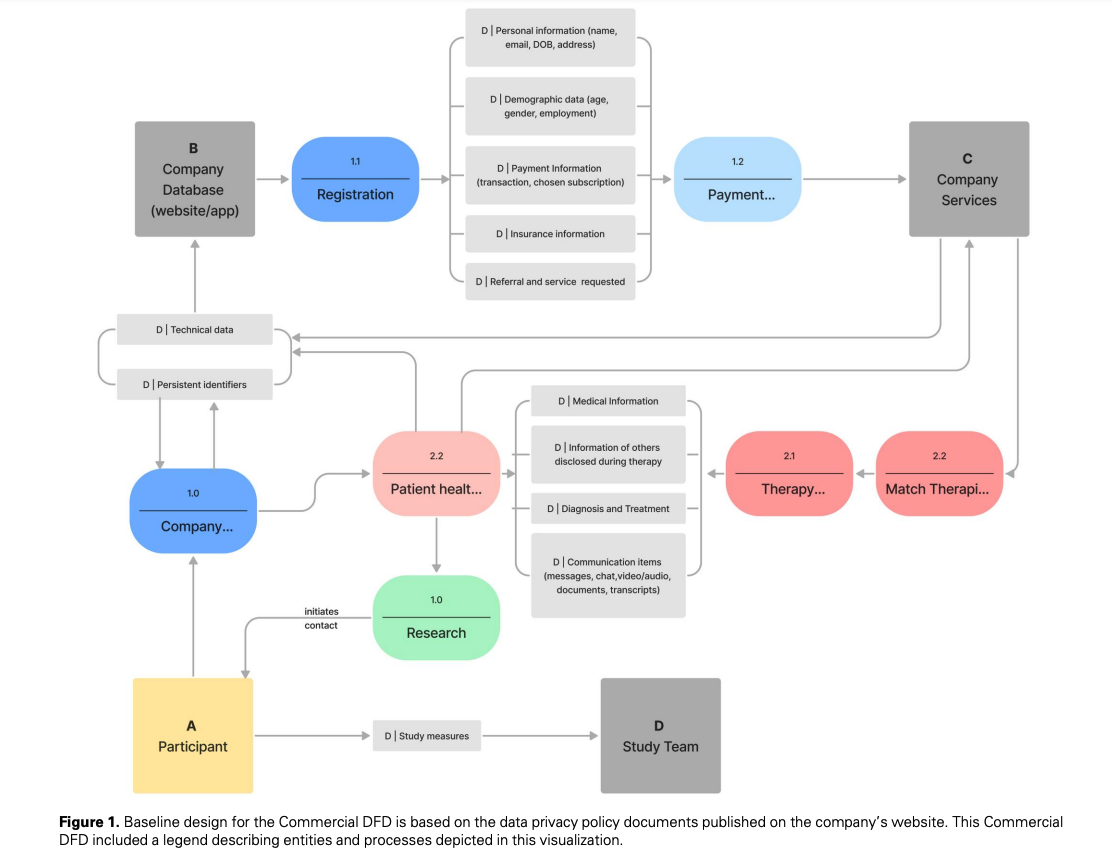
We conducted eight semi-structured focus groups to explore whether dataflow diagrams (DFD) can complement informed consent and improve participants’ understanding of data management and associated risks (N = 34 participants).
Results
Our analysis found that DFDs could supplement text-based information about data management and sharing practices, such as by helping raise new questions that prompt conversation between prospective participants and members of a research team. Participants in the study emphasized the need for clear, simple, and accessible diagrams that are participant centered. Third-party access to data and sharing of sensitive health data were identified as high-risk areas requiring thorough explanation. Participants generally agreed that the design process should be led by the research team, but it should incorporate many diverse perspectives to ensure the diagram was meaningful to potential participants who are likely unfamiliar with data management. Nearly all participants rejected the idea that artificial intelligence could identify risks during the design process, but most were comfortable with it being used as a tool to format and simplify the diagram. In short, DFDs may complement standard text-based informed consent documents, but they are not a replacement.
Discussion
Prospective research participants value diverse ways of learning about study risks and benefits. Our study highlights the value of incorporating information visualizations, such as DFDs, into the informed consent procedures to participate in research.
Conclusion
Future research should explore other ways of visualizing consent information in ways that help people to overcome digital and data literacy barriers to participating in research. However, creating a DFD requires significant time and effort from research teams. To alleviate these costs, research sponsors can support the creation of shared infrastructure, communities of practice, and incentivize researchers to develop better consent procedures.
Technological Adjuncts to Streamline Patient Recruitment, Informed Consent, and Data Management Processes in Clinical Research: Observational Study
Technological Adjuncts to Streamline Patient Recruitment, Informed Consent, and Data Management Processes in Clinical Research: Observational Study
Jodie Koh, Stacey Caron, Amber N Watters, Mahesh Vaidyanathan, David Melnick, Alyssa Santi, Kenneth Hudson, Catherine Arguelles, Priyanka Mathur, Mozziyar Etemadi
JMIR Formative Research, 29 January 2025
Abstract
Background
Patient recruitment and data management are laborious, resource-intensive aspects of clinical research that often dictate whether the successful completion of studies is possible. Technological advances present opportunities for streamlining these processes, thus improving completion rates for clinical research studies.
Objective
This paper aims to demonstrate how technological adjuncts can enhance clinical research processes via automation and digital integration.
Methods
Using one clinical research study as an example, we highlighted the use of technological adjuncts to automate and streamline research processes across various digital platforms, including a centralized database of electronic medical records (enterprise data warehouse [EDW]); a clinical research data management tool (REDCap [Research Electronic Data Capture]); and a locally managed, Health Insurance Portability and Accountability Act–compliant server. Eligible participants were identified through automated queries in the EDW, after which they received personalized email invitations with digital consent forms. After digital consent, patient data were transferred to a single Health Insurance Portability and Accountability Act–compliant server where each participant was assigned a unique QR code to facilitate data collection and integration. After the research study visit, data obtained were associated with existing electronic medical record data for each participant via a QR code system that collated participant consent, imaging data, and associated clinical data according to a unique examination ID.
Results
Over a 19-month period, automated EDW queries identified 20,988 eligible patients, and 10,582 patients received personalized email invitations. In total, 1000 (9.45%) patients signed consents to participate in the study. Of the consented patients, 549 unique patients completed 779 study visits; some patients consented to the study at more than 1 time period during their pregnancy.
Conclusions
Technological adjuncts in clinical research decrease human labor while increasing participant reach and minimizing disruptions to clinic operations. Automating portions of the clinical research process benefits clinical research efforts by expanding and optimizing participant reach while reducing the limitations of labor and time in completing research studies.
Consenting for themselves: A qualitative study exploring a Gillick Competence assessment to enable adolescents to self-consent to low-risk online research
Consenting for themselves: A qualitative study exploring a Gillick Competence assessment to enable adolescents to self-consent to low-risk online research
Maria Loades, Lara Willis, Emma Wilson, Grace Perry, Melanie Luximon, Christy Chiu, Nina Higson-Sweeney
BMJ Open, 13 February 2025
Abstract
Background
Providing digital mental health interventions online could expand access to help for young people, but requiring parental consent may be a barrier to participation. We therefore need a method that enables young people <16 years old (i.e. presumed competent in the UK) to demonstrate Gillick Competence (understanding of purpose, process, potential benefits, and potential harms) to self-consent to online, anonymous, low-risk studies.
Aim
To explore whether a new method for assessing Gillick Competence to participate in low risk, anonymous online studies is acceptable to both young people and parents.
Method
We interviewed 15 13–15-year-olds and 12 parents of this age group in the UK. Using a qualitative approach, we explored the acceptability of a series of multiple-choice questions (MCQs) designed to assess understanding of a specific online self-help research study testing a self-kindness intervention.
Results
The MCQ answers that participants gave mostly corresponded with their narrative explanations of their understanding during interviews. Young people and parents thought that the process was empowering and could increase access to research whilst also promoting independence. However, they emphasised the importance of individual differences and different research contexts and highlighted the need for safeguards to be in place.
Conclusions
The MCQs were acceptable to both young people and parents, providing preliminary evidence for the potential of this process for allowing <16’s to self-consent to online, anonymous, low-risk mental health research. Further research is needed to validate the effectiveness of this process among a diverse range of populations and research contexts.
Between Protection and Participation: Informed Consent, Ethics and Play in Research With Children and Youth
Between Protection and Participation: Informed Consent, Ethics and Play in Research With Children and Youth
Original Article
Maria V. Barbero
Children & Society, 11 February 2025
Abstract
While a robust scholarly dialogue has emerged in recent decades surrounding child and youth-centred research methods, less attention has been paid to how other elements of research design can better account for the needs, vulnerabilities, and perspectives of children and youth. In this article, I discuss challenges tied to informed consent processes and inflexible ethical guidelines in social science research with minors. Drawing from the child and youth studies literature as well as my past research experiences, I explore what it means to develop ethical approaches that are situated, responsive, and relational and which focus not only on the protection of minors but also their inclusion and full participation in research. In doing so, I develop the concept of “playful consent checkpoints” and argue that playful approaches can offer interesting and flexible possibilities for responding to ongoing ethical challenges in research with young people.
Ascribed Agency, Denied Influence: How Adult Narratives Shape and Constrain the Right of Children in the Justice System to be Heard
Ascribed Agency, Denied Influence: How Adult Narratives Shape and Constrain the Right of Children in the Justice System to be Heard
Mark Yin
The International Journal of Children’s Rights, 17 December 2024
Abstract
Following McMellon and Tisdall’s (2020) literature review on children’s participation rights, as embodied in the Convention on the Rights of the Child, Article 12, this narrative review considers how access to these rights is affected by children’s involvement in the criminal justice system. Based on 30 papers relating to youth participation in youth justice, it is argued that adult-driven narratives of criminalised children as “risky”, “self-interested” or “vulnerable” variously undermine their right to be heard, while children’s narratives about themselves are often neglected. This suggests that the “perennial” implementation solutions identified by McMellon and Tisdall belie more fundamental questions about the very idea of childhood – as exemplified by children in conflict with the law – which warrant their own analysis.
 Center for Informed Consent Integrity